AI Listing Photos: What Washington Real Estate Agents Should Know
Virtual staging can help buyers imagine how a home could work for them. But when digital editing changes the property’s condition, permanent features, or surroundings, an attractive image can create an inaccurate impression of what is actually for sale.
For Washington agents using NWMLS, the goal is to present a property clearly while following the applicable photo policy. Before approving an AI-assisted image, review what changed—not just how good it looks.
Key Takeaways
- Preserve the property’s actual condition, layout, permanent features, and surroundings.
- Check the current NWMLS Photo Policy for permitted enhancements and disclosure requirements.
- Compare edited images with their originals before publishing.
- A disclosure does not make a misleading alteration acceptable.
- Review images wherever they appear, including social media and property websites.
Start With the Current NWMLS Photo Policy
The NWMLS Photo Policy is the starting point for checking requirements for virtual staging, renderings, disclosures, and other listing-photo issues. Member sign-in may be required.
NWMLS’s public Real Estate Photography 101 guide also cautions against manipulating photos to misrepresent what is for sale, including removing power lines, adding a lawn or driveway, or removing property defects. Because this overview was published in 2023, consult the current member policy for detailed requirements.
Decorating a Room Is Different From Changing the Home
A digitally added sofa can illustrate furniture placement. Digitally replacing worn carpet suggests an improvement that buyers will not find at the showing. Removing a chair should not also erase an access panel, electrical outlet, or damaged surface behind it.
Ask before publishing: Would a buyer arrive and discover that a meaningful feature or condition differs from what this image shows?
Treat proposed changes to flooring, paint, cabinets, walls, fixtures, landscaping, or views as a reason to stop and check the policy. Do not present invented improvements or surroundings as photographs of the existing property.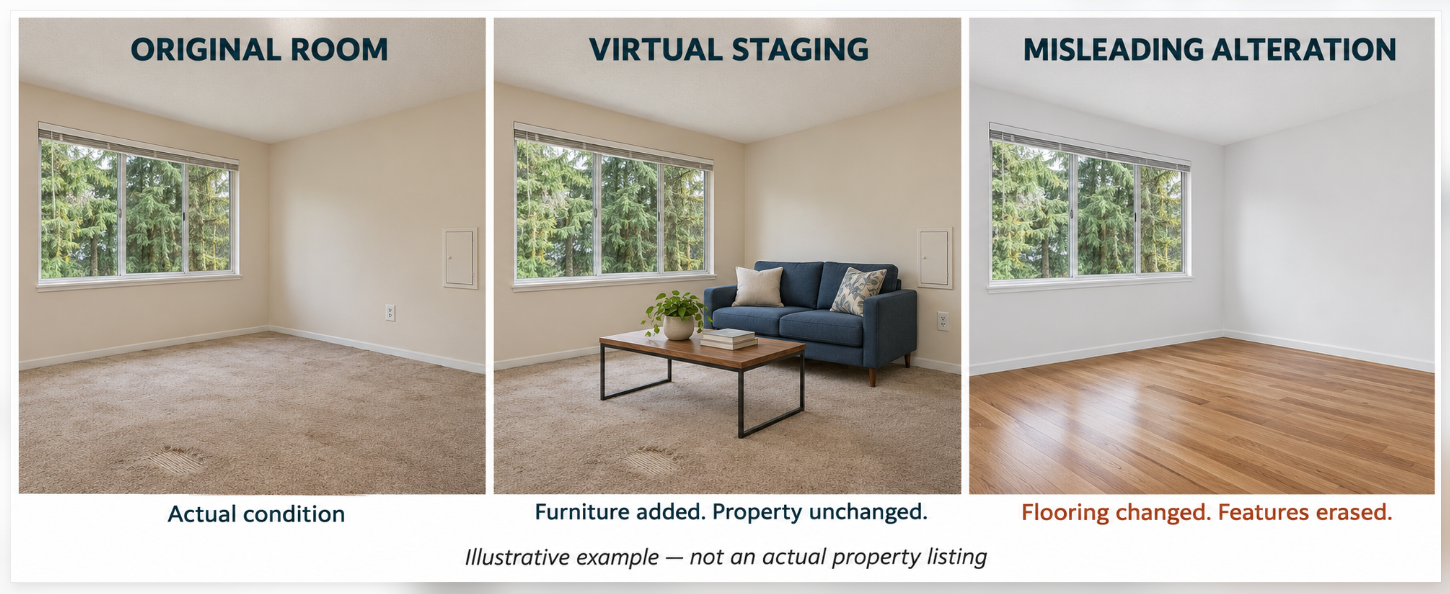
Review the Entire Image Against the Original
AI can change more than the requested object. A realistic result may still contain an altered doorway, missing railing, or invented view. Recommended review practices include checking:
- Doors and windows: Confirm their number, location, and proportions.
- Permanent features: Compare fireplaces, cabinets, appliances, and built-ins.
- Condition: Look for erased stains, cracks, deterioration, or other visible concerns.
- Surroundings: Inspect window views, reflections, utilities, landscaping, and neighboring buildings.
- Scale: Make sure furniture does not create an unrealistic impression of room size.
Make Disclosures Useful to Buyers
Confirm the current NWMLS requirements for disclosure wording and placement before uploading altered media. Check how the disclosure appears to consumers, including when images are distributed to other websites or reused in a separate campaign.
When accurate and permitted by current policy, wording such as “Living room photo virtually staged with digital furniture” describes the change more clearly than “image enhanced.” It would not adequately describe a photograph that also changed flooring or removed a wall.
Give Photographers Clear Instructions
Set expectations before editing begins. Ask the photographer or vendor to preserve the property’s layout, permanent features, finishes, condition, and surroundings; identify altered images; and provide originals for comparison.
Ask whether automated tools or outside editors are involved. Review the final files even when the vendor has worked successfully with your firm before.
Questions Buyer’s Agents Can Ask
If an image raises questions, clarify the edits before clients arrange travel or make decisions based on the photographs.
- Has this image been virtually staged or otherwise altered?
- Does it show the current flooring, paint, fixtures, and appliances?
- Was anything removed other than movable belongings?
- Does the view accurately reflect what is visible from that location?
- Are original photos or a current video walkthrough available?
Photos support the search process. They do not replace inspections or other due diligence.
Correct Misleading Images Wherever They Appear
If an edit changes a physical feature or conceals a condition issue, pause its use and involve your managing broker. Review the original, correct or remove the inaccurate version, and check property websites, syndicated listings, social posts, flyers, and email campaigns. Document the correction and obtain guidance about transaction-specific follow-up.
Helpful NWMLS Resources
Help Buyers Know What to Expect
Effective listing photos attract interest while accurately showing what buyers will find. Careful review, clear disclosures, and consistent editing instructions help agents use AI responsibly and preserve trust throughout the transaction.
Have a Washington purchase or financing question?
Email me at sam@pacificcoastfin.com to discuss how a property’s actual condition may affect your buyer’s financing options.
Educational information only; not legal advice or an official NWMLS interpretation. Recommended review practices are not a substitute for current NWMLS requirements or your firm’s policies. Consult your designated broker regarding a specific listing. Financing is subject to lender approval and program requirements; this is not a commitment to lend.